
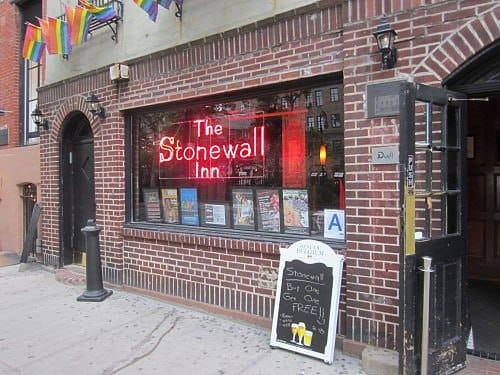
The Stonewall uprising represents a series of spontaneous, yet intensely confrontational, protests by members of the gay community. These events were sparked by a police raid that occurred in the early morning hours of June 28, 1969, at the Stonewall Inn, a well-known gay bar situated in New York City’s Greenwich Village neighborhood.
Around 1:20 a.m., Seymour Pine, who was part of the New York City Vice Squad’s Public Morals Division, along with four other uniformed officers, joined forces with two male and two female undercover police officers already positioned inside the establishment. The standard signal—flashing lights on the dance floor—alerted patrons to the arrival of law enforcement. However, on this occasion, the routine raid quickly deviated from expectations. A delay in the arrival of patrol wagons, intended for transporting arrested patrons and seized alcohol, led to a growing assembly of released individuals and curious onlookers outside the Inn. This crowd significantly increased in size as the night progressed. According to writer David Carter, the police officers eventually became so intimidated by the burgeoning crowd that they remained secluded inside the bar for approximately 45 minutes.
The turning point came when a scuffle erupted involving a butch lesbian who was in handcuffs. As she was repeatedly escorted from the bar’s entrance to the waiting police wagon, she managed to escape multiple times and actively resisted four officers, shouting and swearing, for about ten minutes. Witnesses later recalled that this woman, identified as Stormé DeLarverie, ignited the crowd’s direct involvement when she looked at bystanders and forcefully asked, “Why don’t you guys do something?!” Immediately after an officer physically lifted and threw her into the back of the wagon, the crowd transformed into an uncontrollable mob, described as going “berserk.” It was at this precise moment that the scene escalated into explosive violence.
In an attempt to control the agitated crowd, police officers tried to restrain individuals and knocked some people to the ground, which only further fueled the bystanders’ anger. The riots intensified to such a degree that the bar caught fire, necessitating the arrival of the Tactical Police Force (TPF) of the New York City Police Department. Their objective was to extricate the officers who had barricaded themselves within the Inn. The TPF formed a phalanx—a tight formation—and began efforts to clear the streets, a task they did not fully accomplish until 4:00 in the morning.
The tumultuous events that unfolded that week at the Stonewall Inn had profound repercussions, leading directly to the establishment of some of the earliest radical gay activist organizations in the United States, such as the Gay Liberation Front and Street Transvestite Action Revolutionaries (STAR). A year later, the first Christopher Street Liberation Day was held. This commemorative event involved a march from Greenwich Village to the Sheep Meadow in New York’s Central Park. This march subsequently served as the inspiration and model for gay the Gay Pride parades that are now held annually throughout the United States and in numerous other countries worldwide. Reflecting its historical significance, the Stonewall Inn has been officially designated a National Historic Landmark by the U.S. government.
The Stonewall Inn is still open and a thriving business.